Is Art Alive?
An exploration of aliveness for our times.

I’ve been thinking a lot about creativity—and how, perhaps, creativity is the essence of our humanity. To be human is to create. This is what sets us apart from other animals: we build material objects, craft artworks, shape structures, and even imagine entire worlds.
But let’s take a step back. What is aliveness? It’s a question that feels urgent and exciting, though also fraught in our current moment. I often return to the concept of consciousness. Once, and still for many, consciousness simply meant “awake.” To take a blow to the head or go under anesthesia was to “lose consciousness,” as if being asleep or unconscious erased our state of being. And we used to believe consciousness was entirely in the brain.
Yet my own experiences suggest otherwise. I have felt awareness in places beyond my head—trauma or memory stored in different parts of my body, parts of my body interacting in dialogue as healing occurs. I have connected to the consciousness of people far from me. I have been conscious while dreaming. If consciousness is so much broader than we once thought, what does that imply about aliveness?
There is a movement—one I am part of—that seeks to revive an ancient understanding: that plants, animals, land, and trees are all conscious, all alive. It feels crucial to recognise that we are not solitary strangers in a void, but beings capable of connecting to a vast ecosystem of intelligence. This understanding not only quenches our deep thirst for belonging but also reshapes our values. When we acknowledge the aliveness of the world, we are called to act with respect. When we feel our place in the web of life, we no longer operate from scarcity or fear.
And this leads me to a deeper question: what is aliveness? Could aliveness itself be potential—the capacity to respond, to react, to grow, to change, to adapt, to live and die?
If so, might this potential extend beyond beings? Might it inhabit objects as well?
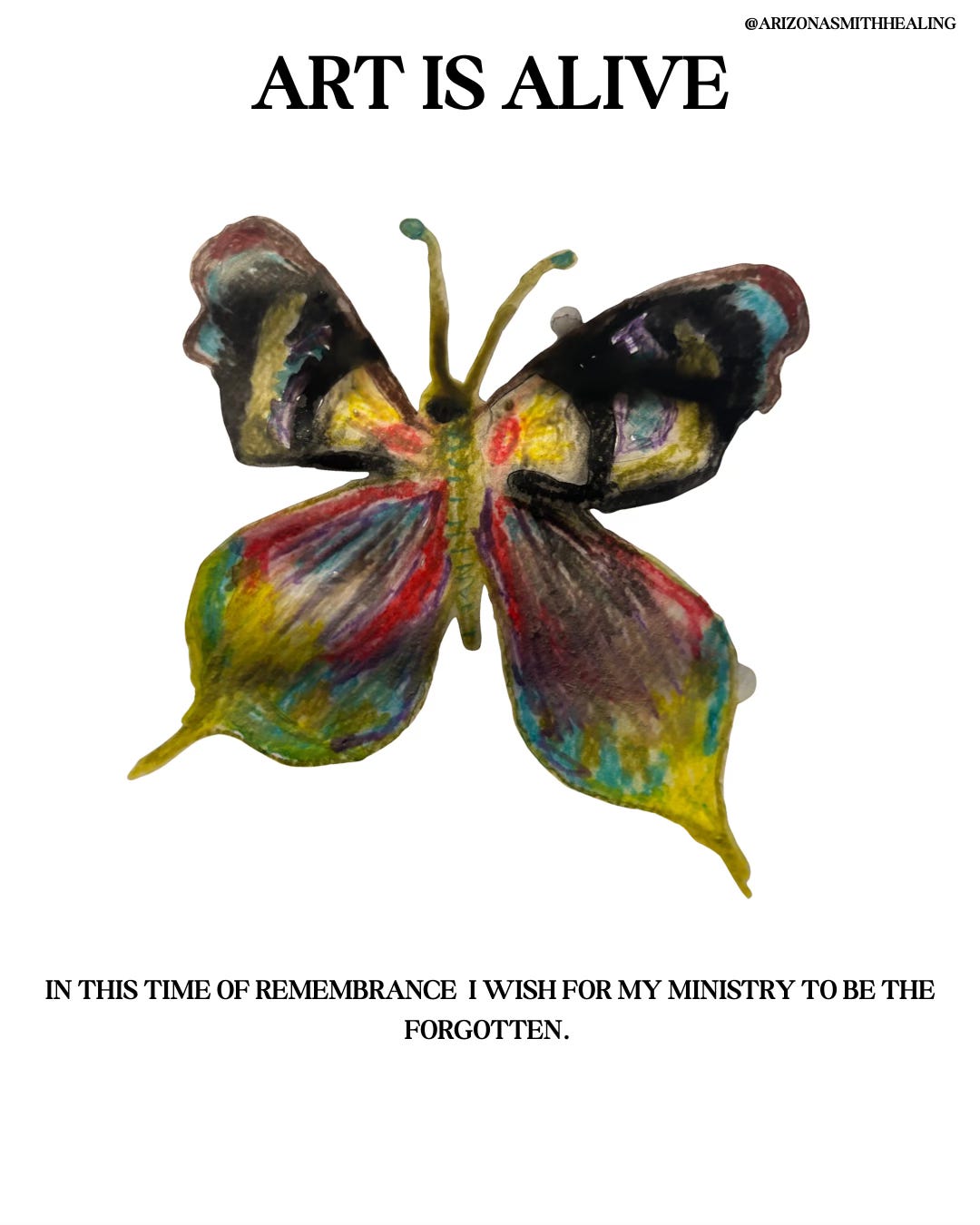
Can art be alive?
When a person pours energy into matter, creating art, could that vitality persist in the object? We know art transforms us, often more quickly than conscious thought can. Music, dance, painting, poetry—they reach deep into non-thinking spaces, creating epiphany, movement of energy, growth, change, reaction, adaptation. In this sense, art carries potential. Art carries aliveness.
But if art is alive, what does it mean that we so often treat it carelessly? Every day we are exposed to millions of images, many of them works of art, many of them less alive. Perhaps one day we will look back and see our overconsumption as a profound misunderstanding. If our humanity is bound not only to creation but also to belonging in nature, then perhaps we must respect not only the world around us but also the transformative energy of creativity itself—both in ourselves and in the work of others.
I may be reinventing an old wheel. Talismans and sacred objects have long been recognised as carriers of energy, and many lineages still honor them. When I look at auras, some objects have them and some do not. My hope is that we remember our ability to discern what is alive and what is not—and that we stop clinging to the inert simply because it is tangible.
Sometimes living means transforming, letting go—but is that not better than turning to stone?